


Most teachers arrive at this question after they’ve already decided they want to teach in the UAE. The salary is tax-free. The sun is near-constant. The benefits packages are generous. The international school sector is one of the fastest-growing in the world.
But then comes the big question: Dubai or Abu Dhabi?
It’s a question that deserves a real answer, not just “it depends on your personality.” Both cities have strong international school sectors. Both offer tax-free salaries and fantastic benefits packages. But they’re genuinely different places to live, and the right choice depends on what you’re actually looking for from your international teaching experience.
Let’s have a look through together!

At a glance: Dubai vs Abu Dhabi for international school teachers
Dubai |
Abu Dhabi |
|
|---|---|---|
| Regulatory body | KHDA | ADEK |
| Number of international/private schools | 227+ | 200+ |
| Monthly teacher salary range | AED 12,000–30,000 | AED 12,000–28,000 |
| Tax on salary | None | None |
| Cost of living | Higher | 5–15% lower (than Dubai) |
| Typical savings rate | 25–35% | 30–40% |
| Lifestyle pace | Fast, cosmopolitan | Calmer, family-oriented |
| International community | Very large | Large |
| KHDA/ADEK inspection transparency | High (published reports) | High (published reports) |
| Public school recruitment | Limited | Strong (ADEK portal) |
The basics: what you’re choosing between
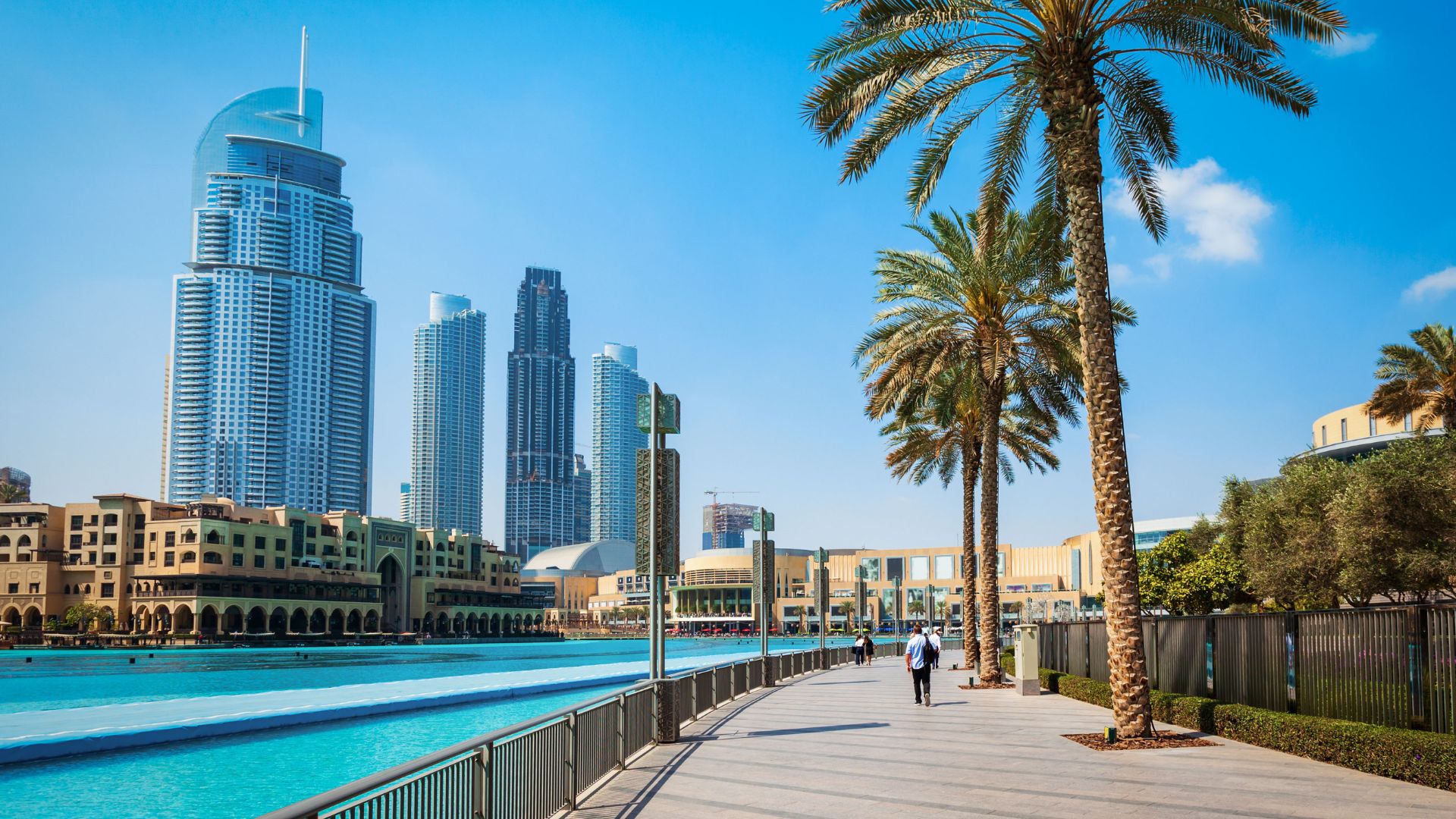
Dubai is the UAE’s most internationally visible city; a fast-paced, globally connected metropolis with over 227 private schools and a school sector regulated by the Knowledge and Human Development Authority (KHDA). It’s the city most international teachers picture when they think about the UAE – a skyline of skyscrapers, 13,000+ restaurants, a beach culture, and a social scene that runs seven nights a week.
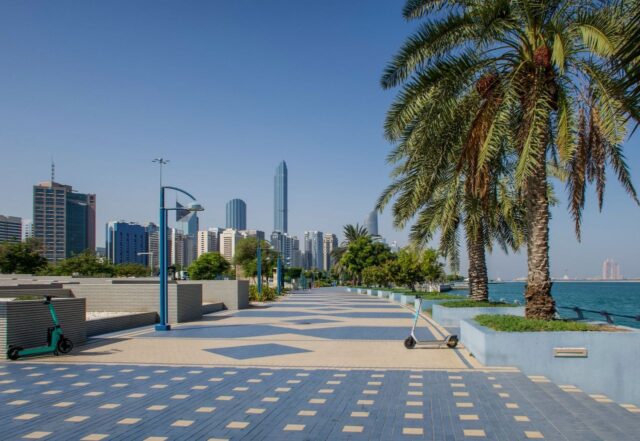
Abu Dhabi is the UAE’s capital – quieter, more family-oriented, and home to more than 200 private and international schools regulated by the Abu Dhabi Department of Education and Knowledge (ADEK). It has its own skyline, its own beaches, and its own identity. It’s the seat of the UAE government, the location of the Louvre Abu Dhabi and the NYU Abu Dhabi campus, and a city that has grown significantly over the past decade as a cultural and educational destination in its own right.
Both cities have a cost of living that is significant by global standards, and both offer salaries to match. The tax-free element is the same in both emirates.

Salary and benefits: how do the numbers compare?
This is usually the first question and the honest answer is that the difference is smaller than many teachers expect.
Dubai salaries
International school teachers in Dubai typically earn between AED 12,000 and AED 30,000 per month (approximately $3,270–$8,175), depending on qualification level, years of experience, and the school tier. Leadership positions command more. All of this is tax-free for most foreign residents as there is no income tax in the UAE.
Our own salary data at Teacher Horizons puts UAE entry-level salaries at an average of $34,700 per year, with experienced teachers averaging $48,300. See our full Salaries and Benefits at International Schools page for a deeper breakdown.
Beyond the base salary, most positions include:
- Housing allowance or accommodation: Worth AED 60,000-150,000 annually at most schools
- Annual flights: Return flights to your home country, typically once per year
- Health insurance: Comprehensive employer-paid cover
- Children’s tuition discounts: Many schools offer free or heavily subsidised places for teachers’ children
- End-of-service gratuity: A lump-sum payment on departure, proportional to years served
Abu Dhabi salaries
Abu Dhabi salaries are broadly comparable to Dubai. Some sources suggest Abu Dhabi government-backed schools pay a premium due to ADEK regulations; others find Dubai edges slightly ahead at the top end. The practical difference for most classroom teachers is small.
What does differ is the cost of living. Abu Dhabi is typically 5-15% cheaper than Dubai for accommodation. Teachers in Abu Dhabi often find it easier to save – the lower cost base, combined with a similar salary, means your savings potential can be meaningfully higher.
The real salary question: savings potential
Our data shows UAE teachers can save around 26% of their income; reflecting the tax-free earnings set against a significant cost of living. That figure shifts depending on how you live. Teachers who rent strategically, cook at home and don’t spend every weekend at beachside restaurants can do considerably better.
Abu Dhabi typically enables a slightly higher savings rate than Dubai at the same income level, simply because your fixed costs are lower.
School culture and the regulatory environment
This is where Dubai and Abu Dhabi start to feel genuinely different and it matters for your day-to-day professional life.
Dubai: KHDA and a market-driven school sector
Dubai’s private schools are regulated and inspected by the KHDA. Inspection reports are published and publicly available. You can read exactly how a school was rated before you apply. Ratings run from Outstanding to Inadequate and the transparency means that school quality is more visible in Dubai than almost anywhere else in the world.
The school market in Dubai is also intensely competitive. Schools compete for students, which creates pressure to deliver. That can be a positive as it drives quality, investment, and well-resourced classrooms. It can also mean higher stakes for teachers in terms of performance expectations and accountability.
Dubai has schools across every major international curriculum: British (including A Level and IGCSE), IB, American, Indian, French, and others. Major school groups like GEMS Education, Taaleem, and Fortes operate multiple campuses. There is also a growing number of premium independent schools targeting the top end of the market.
Abu Dhabi: ADEK and a more structured environment
Abu Dhabi’s schools are regulated by ADEK, which maintains its own inspection and licensing framework. The regulatory environment in Abu Dhabi is considered by many teachers to be somewhat more structured and less market-driven than Dubai’s. Schools tend to be slightly larger and more formal in their administrative culture.
Abu Dhabi also has a significant number of schools affiliated with its Abu Dhabi school network, including public schools that recruit international teachers directly via the ADEK portal. These government-linked schools offer competitive packages and stable employment, though the experience differs from elite private international schools.
Saadiyat Island has emerged as an education hub, with several prestigious international school campuses operating alongside cultural institutions including the Louvre Abu Dhabi and New York University Abu Dhabi.
Lifestyle: what are you actually walking into?
This is where the choice becomes personal and where honest comparison matters most.
Dubai lifestyle
Dubai does not do things quietly. It has more restaurants per capita than almost any major city in the world. It has indoor ski slopes, waterparks, desert safaris and a coastline built for a life spent outdoors. The social scene for international teachers is active; arriving in Dubai, you’ll find it relatively easy to meet people, whether through your school, your housing complex, or the wider international community.
That energy has a cost. Dubai is expensive. A one-bedroom apartment in a reasonable neighbourhood runs AED 3,500-7,000 per month. Eating and drinking out regularly adds up quickly. Teachers who arrive expecting to save aggressively and then discover the lifestyle can find themselves spending more than planned.
Dubai also moves fast. Schools grow, leadership changes, and the broader environment is dynamic. For teachers who thrive on pace and variety, that’s a feature. For those who prefer stability and predictability, it can feel relentless.
Popular teacher neighbourhoods in Dubai: Jumeirah Village Circle (JVC), Al Barsha, Sports City, Arabian Ranches, Dubai Marina.
Abu Dhabi lifestyle
Abu Dhabi has a different rhythm. It’s a large, comfortable city which is genuinely pleasant to live in, but quieter than Dubai in almost every dimension. There are fewer restaurants, fewer events and a smaller expat social circuit. That’s not a criticism; for many teachers, particularly those with families, it’s exactly the appeal.
The cost of living is lower. Rents are typically 5–15% cheaper than equivalent properties in Dubai. The pace of life is calmer. Teachers with children often find Abu Dhabi a more manageable place to raise a family, with more space, less traffic pressure and a slightly more relaxed social environment.
Abu Dhabi’s cultural scene has grown considerably in recent years, with the Louvre Abu Dhabi, the Zayed National Museum, and a year-round programme of events at Saadiyat Island. It’s no longer the “boring capital” that once suffered by comparison to Dubai.
Popular teacher neighbourhoods in Abu Dhabi: Khalidiyah, Al Reem Island, Saadiyat Island, Corniche area, Khalifa City A.
Career prospects and professional development
Both cities offer strong career development opportunities, but the dynamics differ slightly.
In Dubai
The sheer volume and variety of schools means that career movement within Dubai is genuinely possible. If you outgrow your current school, there’s likely another school two postcodes away looking for your profile. Schools in Dubai invest in CPD, often motivated by the KHDA inspection framework. Professional development is linked to inspection outcomes, which means it gets taken seriously.
Senior leader roles are also abundant in Dubai. The rapid growth of the school sector means that leadership positions open regularly, and ambitious teachers can accelerate their careers more quickly than in a static market.
In Abu Dhabi
Abu Dhabi has its own career development ecosystem, with ADEK placing considerable emphasis on continuing professional development. The ADEK schools framework has specific standards for teacher quality and career progression and government-affiliated schools tend to offer structured CPD programmes.
For teachers interested in working within a government-linked education system (rather than a private school group) Abu Dhabi offers experiences that Dubai cannot. The ADEK public school teaching track is a genuine and well-supported career path.
Which city suits which type of teacher?
There’s no right answer. But here are the profiles that tend to thrive in each city:
Dubai tends to suit teachers who:
- Are earlier in their international career and want to build a network fast
- Enjoy a fast-paced social environment and city living
- Are single or in a couple without children, or with children who thrive in stimulating environments
- Want access to a wide variety of school types and can be selective
- Are comfortable with a higher cost of living in exchange for a fuller social life
- Want career mobility; the ability to move schools if things don’t work out
Abu Dhabi tends to suit teachers who:
- Have a family and want a calmer, more spacious environment
- Are prioritising savings over lifestyle spending
- Are interested in working within a government-linked school system
- Prefer a more structured, less commercially pressured school environment
- Want to explore a different side of Emirati culture and identity
- Are happy with a quieter social scene in exchange for lower costs and more space
A note on the rest of the UAE:
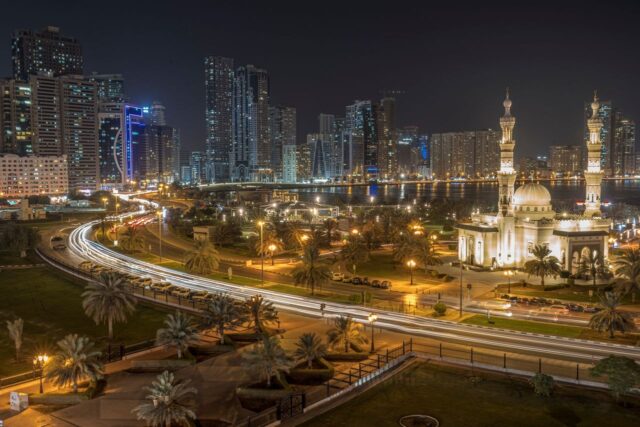
Dubai and Abu Dhabi get most of the attention, but they’re not the only options. Sharjah, Ras Al Khaimah, and Fujairah all have international schools and are worth considering, particularly if you’d prefer lower accommodation costs and are willing to commute. Sharjah in particular has a number of well-regarded schools and sits just 20-30 minutes from central Dubai.
Frequently asked questions
Is the salary really the same in both cities?
Broadly, yes – at the same school tier, for the same role and experience level. Abu Dhabi occasionally offers a small premium on paper for equivalent government-linked roles, while Dubai schools at the top end of the market can be more competitive for premium positions. For most classroom teachers, the salary difference between cities is less significant than the difference between school tiers within the same city.
Which city has stronger job security?
Both have stable international school sectors with genuine structural demand. The ISC Research January 2025 data puts 14,833 international schools globally, with 376 new schools added in six months alone. The UAE is among the fastest-growing markets in this expansion. Dubai’s larger school volume means more total vacancies, but Abu Dhabi has consistent and active hiring, particularly through the ADEK portal.
What if I have children?
Both cities have excellent options for families. Most international schools offer free or heavily subsidised tuition for teachers’ children – one of the most significant financial benefits in the UAE package. Abu Dhabi’s slightly quieter environment suits some families better; Dubai offers more activities and a larger international family community. Talk to teachers already there via the Teacher Horizons community; their perspective on raising a family in each city is more useful than any general guide.
How do I know which schools are good?
Start with the publicly available KHDA inspection reports for Dubai and the equivalent ADEK reports for Abu Dhabi. Then cross-reference with community insights on Teacher Horizons school profiles – real intelligence from teachers who have worked at specific schools is invaluable, particularly for understanding school culture and leadership quality that inspection reports don’t always capture.
Can I move between Dubai and Abu Dhabi if I change my mind?
Yes. Teachers move between emirates regularly, either at the end of a contract or, less commonly, mid-career. The two cities are an hour apart by road. Some teachers even live in one emirate and work in the other, though this is less common. Your UAE residence visa is tied to your employer, not your emirate of residence. A move between cities involves starting a new employment contract, not a new visa process from scratch.
Do both cities have a strong international teacher community?
Yes, though Dubai’s larger size means the social circuit is broader. Both cities have active WhatsApp communities, school-based social groups, and a wider international expat community. Teacher Horizons’ Community Networking platform lets you connect with teachers currently based in both cities – a practical way to get first-hand insight before you arrive.
So: which city should you choose?
Start by being honest about what you actually want from your time in the UAE.
If you want pace, variety and a city that never stops – Dubai. If you want comfort, lower costs, family space and a city that has quietly become a great place to live – Abu Dhabi.
Both cities have strong international schools. Both pay well. Both will give you an experience that’s genuinely different from anything you’d find at home. The difference is in the texture of the life you build around your teaching.
If you’re still weighing up, our school profiles and community insights include first-hand perspectives from teachers currently working in both Dubai and Abu Dhabi. Reading what real teachers say about their schools and their cities is one of the most useful things you can do before you decide.