


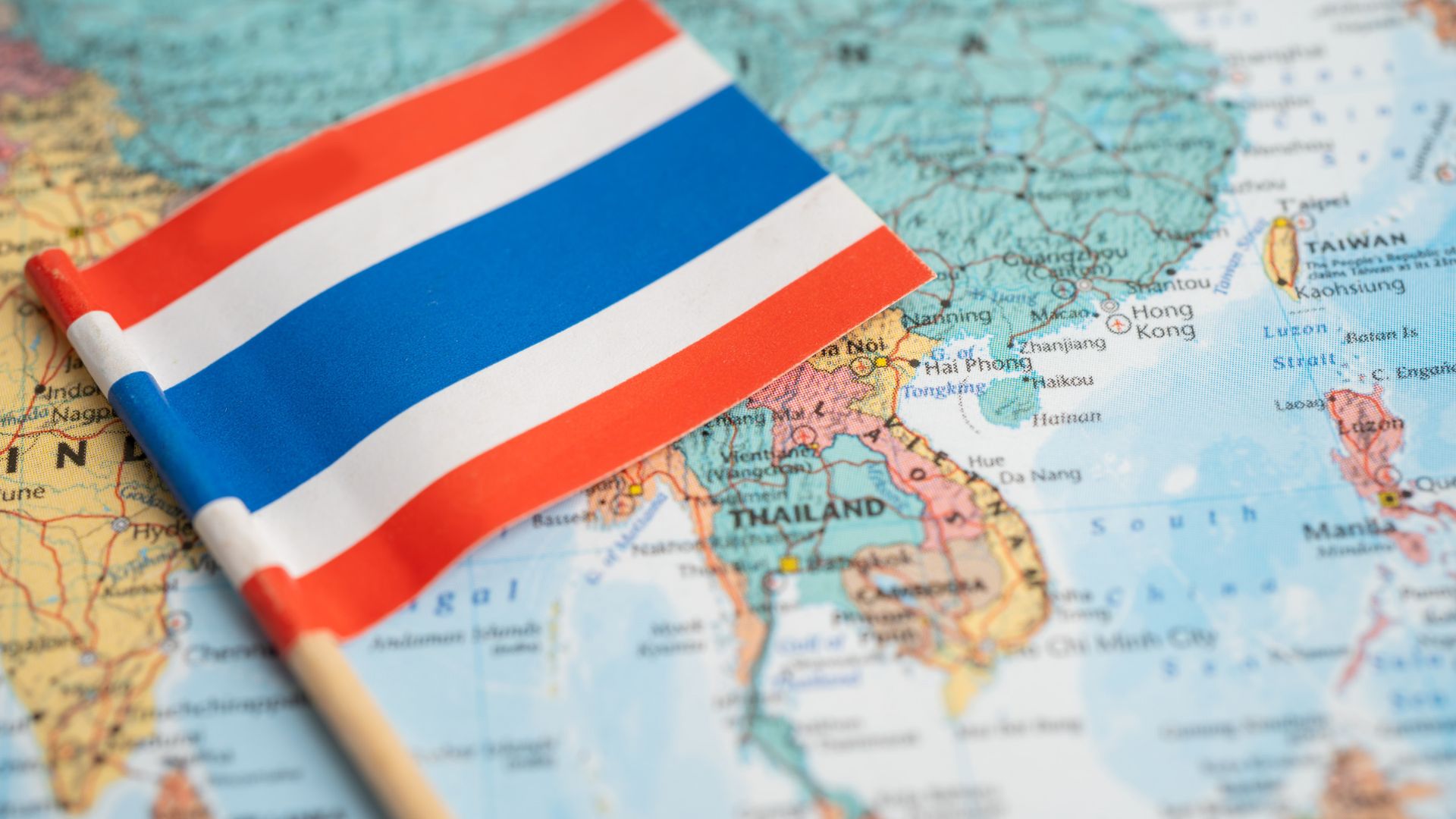
Accepting a new teaching position in a new country is always exciting. What tends to get lost in that excitement, however, is the sheer number of practical things that need to be sorted before you get on the plane.
Most of it is manageable, but some of it takes longer than you expect, and leaving it too late can cost you money, cause unnecessary stress, or – in the worst case – delay your ability to start teaching.
This guide covers what needs to be sorted before you land in Thailand specifically, in the order that matters. It’s written for teachers who have accepted an offer and are now facing the realities of the move.

1. Start the visa process earlier than you think
The Non-Immigrant B Visa is required to enter Thailand as a working teacher. It is issued by a Royal Thai consulate or embassy in your home country and from January 2025, all applications go through Thailand’s mandatory e-visa portal. You cannot legally arrive in Thailand on a tourist visa and convert it to a Non-B once you’re there.
Your school will provide the documentation you need to apply. What they cannot provide is time.
Processing times at major embassies run from four to eight weeks during busy periods. Five business days is possible at lower-volume consulates, but it is not something to rely on.
Start the conversation with your school HR team about the visa as soon as your contract is signed. Ask them for a clear list of what documents they will provide and by what date. Then work backwards from your intended start date, with a buffer.
The single step that causes the most delays is degree legalisation. Before your university degree can be included in a visa application, it typically needs to be notarised and then legalised, sometimes through multiple steps, including apostille certification.
Depending on your country, this can take two to four weeks alone. Do not assume it is a quick errand.
2. Get your background check done immediately
A criminal background check is required by your school before your offer is confirmed and it needs to be dated within six months of your application. UK teachers need an enhanced DBS; US teachers need an FBI Background Check.
Canadian and Australian teachers need their equivalent national or state-level clearances.
These take time. An enhanced DBS in the UK is typically completed within two to four weeks; an FBI Background Check can take longer. Request it the moment you know you’re applying to Thailand as waiting until after you’ve accepted risks delaying your start.
Your school’s HR team will tell you exactly which check they accept. If you are already overseas when you apply, some home-country checks can be initiated remotely. This is worth confirming with the relevant authority before you assume you need to fly home.

3. Understand the work permit timeline
Once you have your visa and arrive in Thailand, your school applies for your Work Permit on your behalf through the Ministry of Labour’s digital system. The physical Blue Book no longer exists; everything is handled electronically since October 2025.
You cannot legally work until the Work Permit has been issued. Ask your school specifically: how long does this typically take and what is the school’s policy on teaching during the processing window?
Some schools allow a short supervised period while the permit is being processed. Others do not permit any classroom work until the document is confirmed. Knowing this in advance avoids a very disorienting first week.
The KSP Teaching Licence (issued by the Teachers Council of Thailand) is a third document required for legal teaching in Thailand. Your school handles this application on your behalf; you will need to provide supporting documents.
Foreign teachers receive a temporary waiver valid for two years, renewable up to six. Ask your school what documentation you need to supply and by what point.
4. Sort your finances before you leave
This is one of the areas most commonly under-prepared. A gap in banking access in your first weeks in Thailand is at best inconvenient and at worst a genuine problem.
Home country banking: Before you leave, make sure your home bank account is set up for international online access, specifically for online transfers and card use abroad. Many home banks charge high fees on international withdrawals; check whether yours does and consider setting up a lower-cost alternative. A currency account or international transfer service through a reputable provider can save significant money on regular transfers to Thailand.
Thai bank accounts: You cannot open a Thai bank account before you arrive. The standard accounts for international teachers are at Bangkok Bank or Kasikorn Bank (KBank).
You will need your passport, your Non-Immigrant B Visa and typically a letter from your school confirming your employment and address. Some banks also ask for a lease agreement. Your school HR team should be able to advise on which branch is easiest for foreign residents and what documentation to bring.
The bank account is usually opened within a day or two of the right documentation being assembled, but your Work Permit may need to be issued first, depending on the bank and branch.
PromptPay: Once you have a Thai bank account, registering for PromptPay (Thailand’s instant transfer system, linked to your national ID or phone number) makes paying for almost anything easier e.g. markets, landlords, utilities. Ask about it when you open your account.

5. Healthcare: vaccinations and insurance
Do not leave this until the week before you travel.
Vaccinations: Your home country’s travel health guidelines for Thailand are the right starting point. Baseline vaccinations for extended stays typically include Hepatitis A, Hepatitis B, Typhoid and Tetanus/Diphtheria, with Japanese Encephalitis and Rabies recommended for longer-term residents. Rabies pre-exposure vaccination is particularly recommended for teachers who will spend extended time in Thailand, given the presence of dogs and wildlife.
A travel clinic appointment, not just a GP appointment, gives you personalised advice based on your health history and intended activities. Book this four to six weeks before your departure date, as some vaccine courses require multiple doses over several weeks.
Health insurance: Your school’s package almost certainly includes international health insurance. Before you leave, confirm: what is covered, what the excess is, what the process is for accessing care and whether there is a waiting period before cover begins.
Bumrungrad International Hospital in Bangkok is one of the most internationally recognised private hospitals in Southeast Asia. Knowing which hospitals are on your school’s approved list is practical preparation.
Keep a copy of your insurance documents – policy number, emergency contact line and claims process – in your phone, in your email and on paper. The first time you need it is rarely a convenient moment.
6. Sort your accommodation strategy
Most teachers arrive without having seen their apartment in person and that is largely unavoidable. The key is having a clear strategy rather than making decisions under time pressure in your first week.
If your school offers temporary accommodation for new international staff, even a short-stay option in the first two weeks, take it. It gives you time to explore neighbourhoods, understand commute realities and see apartments in person before you commit. Signing a year-long lease on a place you’ve only seen in photos is a very easy way to spend a year regretting it.
Research neighbourhoods and price ranges before you leave using Thai property listing sites. Have a shortlist of areas that suit your school’s location and your budget. Most school HR teams can advise on where current international staff live and what typically works for people in your situation.
Budget for a deposit. Most Thai landlords ask for two months’ deposit plus the first month’s rent upfront. Have this available in a form you can access in your first few days. Your home debit or credit card will work initially, but be prepared for the foreign transaction fees.
7. Phone and connectivity
Sort this before you land, not after.
A local Thai SIM is cheap, fast and available from the airport on arrival. AIS and True Move H are the two most widely used networks. A data SIM costs a few hundred Baht per month and gives you fast, reliable 4G/5G coverage across Bangkok and most of Chiang Mai, along with the rest of the country.
Download Google Translate before you leave and ensure the Thai language pack is available offline. You won’t need it constantly as most service staff in central Bangkok speak enough English, but it is invaluable for menus, signs and navigating admin that hasn’t been translated.
If your school uses a specific communication platform for staff, get access set up before you arrive so you’re not scrambling in your first week.
8. Sort your home-country admin before you go
The weeks before departure are busy, but the admin you don’t sort before you leave tends to become the admin that follows you to Thailand and costs you unnecessary time and money.
Tax: Inform your home country’s tax authority of your departure and overseas employment status. Requirements vary significantly; UK teachers should notify HMRC; Australian teachers the ATO; US teachers should understand that the US taxes citizens on worldwide income regardless of residency, and overseas filing obligations apply. Get specific advice for your nationality if you’re unsure.
Pension: If you have a home-country pension or superannuation, understand what happens to it during your time overseas. Some pension schemes allow contributions to continue; others pause automatically. Speak to your provider before you leave.
Post: Redirect any regular mail to a trusted person at home or to a postal forwarding service. Unexpected official correspondence like tax codes, electoral roll notices, pension letters arriving at an address you no longer live at is an irritant that is easy to prevent.
Subscriptions and direct debits: Cancel any subscriptions that don’t travel with you. Check which direct debits need to remain active for home-country obligations such as mortgage, storage and insurance, and ensure your home bank account has sufficient funds to cover them automatically.

9. Build your community before you board
International teaching can feel isolating in the first weeks. You arrive new to a school, a city and a country, often without anyone who knows your name beyond your immediate colleagues. Doing some community-building before you travel makes those early weeks noticeably easier.
The Teacher Horizons community network lets you search international educators by city, school and subject area. Finding teachers already based in Bangkok or Chiang Mai who are willing to share what the experience is like gives you a practical head start before you’ve unpacked.
10. What to pack – and what not to
A first international posting to Thailand is not the time to pack your entire life. The country has excellent retail – furniture, appliances, clothes, kitchen equipment and most things you might need are available locally at good quality and reasonable prices.
What to prioritise in your luggage: professional resources you use regularly, sentimental items and things that cannot be replaced. Pack prescription medications for longer than you think you’ll need as access to specific formulations can vary in Thailand. Bring enough clothing to be comfortable for four to six weeks, then shop locally once you know what your life there actually requires.
What to leave behind: heavy winter clothing (you will rarely need it in Thailand), large household items and anything that will cost more to ship than to buy locally. Shipping to Thailand is possible but expensive and slow. Most experienced teachers recommend arriving light and building up once you understand what your life there actually requires.
Pack a print copy of every important document – passport, visa, employment contract, degree certificate, insurance policy, emergency contacts – in a folder. Keep it in your hand luggage, not your checked bag.
Frequently asked questions
When should I start the visa application process?
As early as possible after signing your contract, ideally at least three months before your intended start date. The degree legalisation process alone can take four to six weeks depending on your country and the institution involved.
Add embassy processing time on top of that and a three-month lead time quickly becomes tight. Starting early gives you a buffer for delays; starting late creates risk.
What vaccinations do I need before moving to Thailand?
The standard recommendations for extended stays include Hepatitis A, Hepatitis B, Typhoid, and updated Tetanus/Diphtheria as a baseline. Japanese Encephalitis is typically recommended for longer-term residents, particularly those who will spend time in rural or green areas.
Rabies pre-exposure vaccination is recommended for long-term residents given the risk from animal bites. Book a travel clinic consultation at least four to six weeks before your departure as some vaccine courses require multiple doses.
Can I open a Thai bank account before I arrive?
No. Thai bank accounts require you to be physically present in the country with your Non-Immigrant B Visa and supporting documentation. Most teachers open their account in the first week after arrival at Bangkok Bank or Kasikorn Bank, with help from their school HR team. Plan your first month’s finances around the fact that your account will take a few days to open. Keep an international card accessible and know your home bank’s foreign transaction fees.
What should I do about my home-country tax and pension obligations?
Notify your home tax authority of your departure and overseas employment before you leave: HMRC for UK teachers, the ATO for Australians or the relevant authority for your nationality. US citizens should note that the US taxes on worldwide income regardless of where you live and overseas filing obligations apply.
For pensions, check with your scheme whether contributions can continue during overseas employment. Getting specific advice for your nationality before you go is worth the time.
When can I actually start teaching after I arrive?
Your Work Permit must be issued before you can legally teach. This is applied for by your school on your behalf after you arrive, through the Ministry of Labour’s digital system.
Depending on the school and the timing of your paperwork, processing can take a week to several weeks. Ask your school specifically what their typical timeline is and what their policy is on classroom activity during the processing window. Good schools have clear, honest answers.
How much money should I bring for the first month?
A practical rule of thumb is to have at least two months’ worth of living expenses accessible before your Thai bank account is open and your first salary arrives. In Bangkok, that means roughly $2,000-$3,500 USD in accessible funds, enough to cover a deposit and first month’s rent, daily living and unexpected setup costs. Having this available in a combination of international card access and small amounts of local cash (withdrawn on arrival) prevents the first-week financial squeeze that catches many teachers off guard.

Arriving prepared makes all the difference
The practical steps above are not complicated, but each one takes time and time runs out faster than it appears when you’re also completing your school contract, finishing a notice period and saying goodbye to your life at home.
The teachers who land in Thailand feeling settled and ready are the ones who worked through the list early, not the week before they flew.
Teacher Horizons connects qualified international school teachers with positions across Thailand. Your adviser can help you think through the move, connect you with teachers already based in Thailand and support your preparation from the moment you sign. Browse Thailand teaching roles and start that conversation today.